
PREMIUM CHOLINE SOURCE
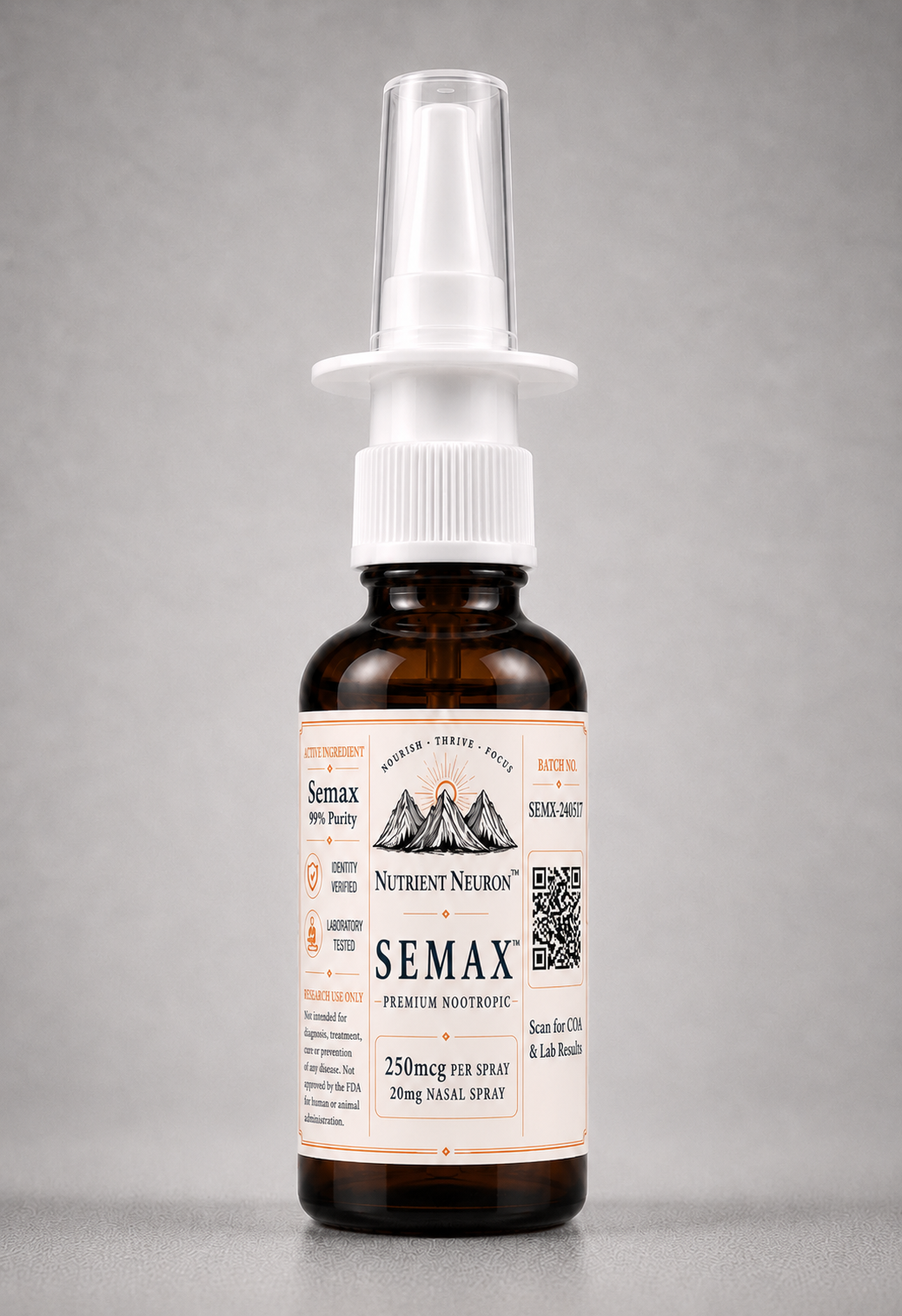
Semax Nasal Spray
Research peptide formulated for cognitive performance, focus, and neuroplasticity research.
Third-Party Tested • COA • Quality Screened
ABOUT SEMAX NASAL SPRAY
Research Peptide for Cognitive and Neuroplasticity Studies
Semax is a synthetic peptide that has been studied for its potential role in cognitive function, learning, memory, and neuroplasticity. It has attracted interest within the scientific community for its unique structure and activity within the central nervous system.
Our Semax Nasal Spray is manufactured using high-purity raw materials and undergoes third-party laboratory testing for identity and quality.
THE SCIENCE
How Semax Has Been Studied
Semax is a synthetic peptide derived from a fragment of adrenocorticotropic hormone (ACTH). Unlike ACTH itself, Semax was designed without hormonal activity and has been the subject of scientific research focused on cognition, learning, memory, and neuroplasticity.
Research has explored Semax’s interaction with neurotrophic signaling pathways, including those associated with Brain-Derived Neurotrophic Factor (BDNF), a protein involved in neuronal growth, adaptation, and synaptic plasticity.
Scientists have investigated Semax for its potential role in:
- Learning and memory processes
- Attention and cognitive performance
- Neuroplasticity and neuronal adaptation
- Stress resilience and cognitive recovery
While research continues, Semax remains an area of interest within neuroscience due to its unique mechanism and effects observed in experimental settings.
RESEARCH LIBRARY
Explore the Published Research
- Effects of Semax on the Default Mode Network of the Brain
Healthy volunteers received intranasal Semax or placebo and underwent resting-state fMRI. Researchers observed changes in brain network activity after Semax administration.
[ Read Study ]
- Efficacy of Semax in Patients with Ischemic Stroke
This clinical study evaluated Semax in patients recovering from ischemic stroke. Researchers reported increased BDNF levels along with improvements in functional recovery and motor performance.
[ Read Study ]
- Review Discussing Human Memory and Attention Findings
This peer-reviewed article summarizes Semax research and notes that Semax has been reported to stimulate memory and attention in both rodents and humans following intranasal administration. While not a clinical trial itself, it is a useful citation discussing human cognitive findings.
[ Read Study ]
Semax nasal spray FAQ
The brain relies on a complex network of neurotransmitters and nutrients to regulate memory, attention, learning, and mental performance. Explore the concepts below to better understand the role of choline, acetylcholine, and other key components of cognitive function.
- What is Choline?
Choline is an essential nutrient that supports brain health, cell membrane structure, and the production of acetylcholine. Because the body produces only limited amounts of choline, it must also be obtained through diet or supplementation. Adequate choline intake helps support memory, learning, attention, and overall cognitive function.
- What is Acetylcholine?
Acetylcholine is a neurotransmitter essential for memory, learning, focus, and mental processing. It supports information encoding and recall in the brain while also regulating muscle movement and the body’s “rest-and-digest” functions. Because some cognitive enhancers increase demand for acetylcholine, choline sources such as Alpha-GPC or Citicoline are often used to help maintain healthy levels.
- Why Is Acetylcholine Important?
Acetylcholine is a neurotransmitter involved in memory, learning, attention, and mental processing. It plays a key role in communication between brain cells and supports focus, information encoding, and recall. Healthy acetylcholine signaling is essential for cognitive performance and overall brain function.
- What is Cholinergic Enhancement?
Cholinergic enhancement refers to increasing the activity of acetylcholine, a neurotransmitter involved in memory, learning, attention, and mental clarity. This can be achieved by supporting acetylcholine production, release, or signaling, and is often used alongside compounds that increase acetylcholine demand, such as certain racetams.
- What is Dopamine?
Dopamine is a neurotransmitter involved in motivation, reward, focus, learning, and movement. It plays a key role in goal-directed behavior, attention, and mental drive. Balanced dopamine signaling supports motivation and cognitive performance, while dysregulation has been associated with conditions such as ADHD and Parkinson’s disease.
- What is Serotonin?
Serotonin is a neurotransmitter involved in mood, emotional regulation, sleep, appetite, and social behavior. It contributes to feelings of well-being and serves as a precursor to melatonin, which helps regulate healthy sleep cycles.
- What is Glutamate?
Glutamate is the brain’s primary excitatory neurotransmitter and plays a vital role in learning, memory, and communication between neurons. It helps support synaptic plasticity, the brain’s ability to strengthen and adapt neural connections. Healthy glutamate signaling is essential for cognitive function, while maintaining balance with inhibitory neurotransmitters such as GABA is important for overall brain health.